Thursday, February 27, 2014

Green Excitement

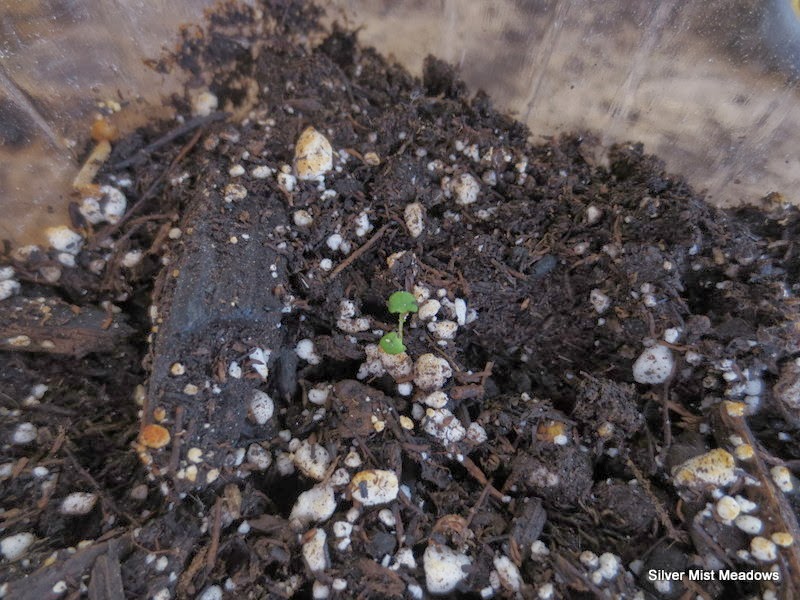
I am weird.  I know this.  I dont mind this either.  I am one of those people that get excited over the smallest and oddest things.  I love to see new things emerge and things grow and new life, in all forms.  So, as with every year, I started some seeds.  In years past I didnt have my green house so inevitably, my house was too small for all I would start and half would die from lack of light.  Just the way it is.  Well, this year, I have my greenhouse.  For the most part, it has worked well.  There are kinks I need to work out for next winter, but for the big reason, starting plants to be ready to plant in May, it is working great.  A week ago I started another batch.  My first batch is now almost a month old and doing very well, the more cold hardy things like peas, lettuce, and onions.  This batch though was pumpkin, cucumber, beans, and carrots.  Everyday, I go in to water the older plants and check the seeds to see if anything sprouted.  It is like a kid at a birthday party.  Awaiting the gifts so you can open them.  I love to go in and see a tiny sprout barely out of the ground.  Well, in this case, barely out of the soil in the packets.  Today, this is what I found when I went in.


Cucumber Sprout


Cucumber Sprout


Pumpkin Sprout


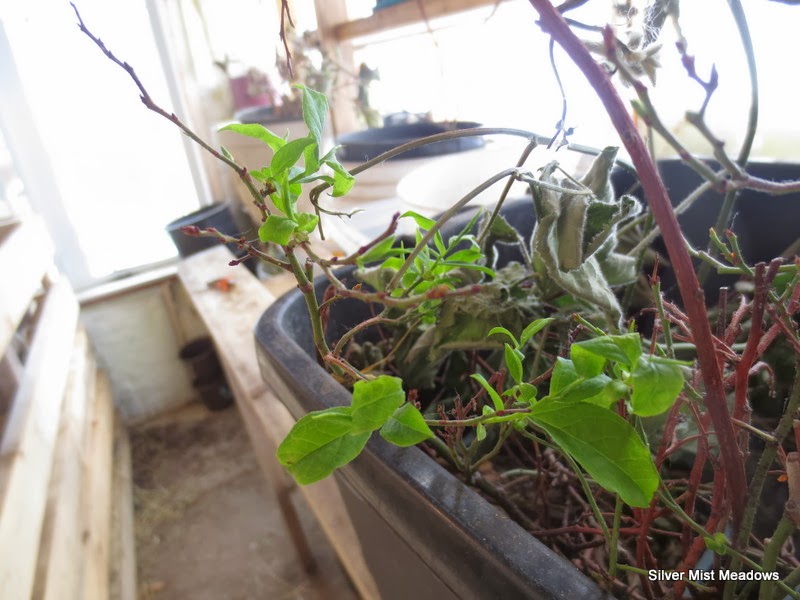
My Blueberry Bushes!  


Another Blueberry Bush.


This is buds on my largest Blueberry Plant


Carrot Sprout.


The same carrot sprout.  Just looks cool.


Pea leaf.


Tomatoes, Corn, and Dill.


These are the one month old variable plants.


Tomato.


Tomato.


Dill.


Basil.


Basil.


Pea plants and green onion.


In the front is pea plants and garlic.  The pot in the back (right) is a normal yellow onion I bought from the store that started to sprout.  So I planted it.


Buds on my chives.


Another bud on the chives.


Thyme sprout.


And this is my perpetual helper.  She has to be in the greenhouse when ever I am.  This is Tink.

At least I love a simple life.  I cant wait to taste some of the veggies of my labor lol.  I really do enjoy seeing this and knowing that I am helping to nurture it along.  I just hope that I can pass on this love of growth and transformation to my children.  They love to go and pick the veggies and eat them off the plant, so maybe that will be enough to start a seed in their hearts.

Wednesday, February 19, 2014

Ice Inspiration

There always seems to be something.  You have a lot to do and not a lot of time.  So you schedule it out so that you can get things done on time for your needs.  You work hard at your daily list and just as you think by some small chance you will make your deadline, bam!  Something happens.  It doesn't always have to be big either.  It can be something as small as calling to get some info from someone.  Yesterday we called to get more info on licensing and permits for starting our diary.  One call turned in to four hours on the phone with various different people and offices.  So, how do you look at it?  You are now behind your schedule yet got a lot of good info you needed.  Good and bad?  I heard it said in farming you take the bad with the good.  I think it is that way in life.  Not just farming.  Farming is dealing with life and a few hundred acres. 
So, combine the hours on the phone with the walk I decided to take yesterday to check the highland cows and horses, mostly because the hoarfrost was awesome, and my day was shot!  I knew the animals were fine as I can see them from my upstairs of the house.  But how many of you have seen really clear and beautiful hoarfrost?  This was what we got to wake up to.

The view into our pasture.

The horses coming out of the trees to say hello.  All the white on the trees are hoarfrost.

Linnie, the Highland Cow.  See the frost on her hair?

Up close of hoarfrost on tree stems.

Up close of hoarfrost on cattle panels.

Beautiful huh?  For me, it isn't just about taking the bad with the good.  It is about looking beyond that.  Looking at the possibility of what might be and what is under it all.  Take the hoarfrost for example.  It is a combination of heavy fog and sub 0 temps.  The fog touches something and it creates tiny ice crystals and they build and build.  The tiniest little drop of water, so small it can hang in the air can create beauty like this. 
So if we take the bad with the good and look deeper, maybe we can all find the inspiration and beauty we need to get our lists done and learn to enjoy either the process or the outcome.  Besides, if it isn't bringing good or beauty to your life, why do it?

Saturday, February 8, 2014

Realizations

I originally wanted this blog to be about the successes of the farm.  But you know what?  That isnt what a farm is about!  It is about the learning process.  It is trying new things when something doesnt work like you want it to.  It is about working hard and persevering to reach a goal that you want.  It is about life, death, laughter, and heartache.  In one day you can have so many different emotions and many of them will rush at once.  I think that this week was a reality check for us.  Our whole goal has been to make the farms we remember our grandparents being on when we were kids.  Ones that have many different animals that all work together and they can make a living on it.  May not be a big one, but it was enough.  We want to be together and work together as a family.  We want the bonds that we will hold us together through it all.  There are hard times.  A lot of hard times.  There are good times.  Not as many as you would hope, but that is what you work so hard to get.

So here is an update of things since November.  This winter had been horrid.  We lost the first two calves of the season to -40 C cold and winds.  Then we had a bull calf born and all was ok.  Then two days later, a heifer calf born and she ended up half frozen due to weather and had pneumonia.  Thank goodness (or not depending on how you look at it) that we have a working relationship with our vet.  We called in and got a shot of Nuflor and she is totally recovered in a matter of days.  She is now a bottle calf.  My barn is full so I had no where to put her, so she is in my green house that is attached to my house.  She was too big to fit in a dog crate so I put her in a make shift pen in there.  We have a sale in April we are supposed to go to and cant seem to get anything to work right.  My chicken house still isnt done (was supposed to be done in December) so that I can separate the birds to get pure chicks.  My pigs that I bred do not seem to have carried anything.  They should be due in 3.5 weeks, but nothing.  I was supposed to have had piglets for that sale.  I had plants started and the new kittens we got in December had killed half of them.  They like to knock the pots over.  The rabbits wouldnt breed.  They just fought.  The girls would not settle.  After several attempts over a period of a few weeks I finally got ONE to settle.  Now just hoping she delivers so that I have my baby bunnies for the sale.  I watch them and do not leave them so I know when a successful breeding attempt was made.  My new buckling that I got last fall seems to not have grown at all over winter.  He has been up and down so much with this weather.  We have been working them every three months mostly cause even the vet doesnt know what else to do for them.  The two does are good.  He hasnt been.  He finally has started to turn around and get really good over the last week.  It seemed no matter how much food and water he had, he just was not growing!  He even felt thin.  So much for having goat kids this year!  He has been in no shape to deal with the girls.  And yes, my goats are tested and they are CAE, CL, and Johnnes free.

Ok, I will stop there.  You see my point, right?  It is about learning and figuring things out.  Here it many times takes more then one person to do all the chores and other things that need to be done.  It is the nature of the beast as they say.  So, when we sit down and realize that the projects we are behind in are the most important projects on the farm, it is NOT a good feeling.  Then when we realize that we are loosing money on the farm due to these set backs, it is even worse.  Oh yeah, then combine those feelings and realizations to the fact that it is Dan's job that was keeping him gone 12 hours a day and causing all sorts of havoc, well, then you have a hard choice.  Do you keep your job and know you have money to pay the bills, but everything else suffers for it, or do you quit your job and make everything else, including your family life, better and just work hard to try pay the bills off what you can and will make off the farm?  Knowing that you only have a few months of savings to make sure that bills are paid.  Each family and person will have to make those choices for themselves.  Our decision we came to as a family, which means, no cable tv, no eating out, no extras for a long time, was for Dan to be here.  In order for us to reach our goals, we have to make sacrifices and work hard.  The only way to do that is to do it together every day.

So, our big realization?  Trust in yourself and each other.  There are bad times.  There are good times.  There are hard times.  Always remember your blessing and remember that the trails will pass.  Keep in mind what is most important for you and your family.  Our blessings are many this winter too.  The heifer calf was the first heifer born from a mom that has given us 14 prior bull calves.  She is healthy now, very friendly, and loves the attention.  She will be a great cow to have here.  The buckling is getting meat back on him.  It is hard to keep him in his stall in the barn now.  He would rather jump out and run all over the barn and head butt the girls and show he is feeling better.  We have the go ahead on our milk parlour and are finishing the approvals on our processing building.  And most important.  We have each other.  I realized through all of this that this is really what it is about.  Working, failing, and picking yourself back up to try again until you succeed as a family working towards your future.

Sunday, January 26, 2014

Grain Dryer + Chinook = Capsize

We have these strong winter wind storms up here in the great white north.  They are called Chinook's.  We also have plow winds.  They are very different and both can be dangerous.  I prefer a Chinook.  Why you ask?  Well, because it is WARM!  It can be -40 F and with a Chinook it will warm up to +40 F over night.  It will stay warm until the Chinook moves on.  We have had them last two weeks.  The winter break they give is so wonderful, but normally it is just a bit of wind that warms it up 10 degrees and only stays for a few hours.  Now a plow wind can only be described as a sideways tornado.  And it does not warm up the air.  Now most years we get Chinooks one or two times a year and plow winds we can generally avoid because we, unlike a lot of neighbors, have lots of trees.  They can and do knock over trees, but in general our area seems to not have very many of these.  

So this winter is very odd.  Instead of having one or two small Chinook's, we had a huge long one.  It started with the winds.  They came from the south and south west.  Strong enough to shack the house, blow out windows and over turn equipment.  Our grain dryer was the worst hit.  It was on it's stand, all secure, and has been for years.  Yet the unrelenting winds did not care.  Gusting to over 120 km.  Luckily the grain truck wasnt damaged too.  But the grain truck stopped the grain dryer from going anywhere.  A grain dryer is normally very round and stands in the air.  Well, not anymore.  


You can see part of the grain dryer top is under the truck and the metal sides that keep the grain in is all bent up.  The center is luckily untouched, but the screens are destroyed.


The screens around the outside are normally attached to each other.  You can see on the right that it is fully open and on the left you can see how smashed up it really is.

Once spring hits (as our temps are back below 0 again) and all the snow melts we will stand it up and see if we can straighten any of the screens.  A good hammer and a welder and we hope we can fix it.  We will know later in the summer.

Monday, January 13, 2014

Orphaned Calf and a Good Dog

Something can be said for a good dog.  My dog may not be a working dog.  She may not always listen either, but you know, when it comes to baby animals, she is the best.  We have not had many orphaned animals here, but last year we did have a calf.  Mom, who is usually a good producer and a good mom, was disturbed at birth from coyotes and never bonded to the calf.  So, of course, in it came.  We were building our greenhouse and it was covered and warmer then outside, so we put the calf in there.  When he came in, he still had all the amniotic on him, mom never cleaned him, never nursed him, and he was half frozen, very very cold to the touch.  We knew the first thing was to get him dried off and warmed up.  Once that happened, then he would be able to stand and drink.  We got the calf on a bed of hay in an extra large dog kennel with a heater blowing at him and I went to get towels.  Not gone more then a few minutes and I come back to the dog having cleaned the calf mostly off.  Stimulating the calf and cleaning him off.  She (the dog) was doing a great job cleaning him off and getting him him warmed with all the licking.  So I decided to leave her to it.


So then I go to get the camera when I finally think about it.  She has been cleaning for about 10 minutes already and the calf is finally starting to respond.


She really seemed to enjoy cleaning him off.


Here is the dog still cleaning cleaning off the face.  You can see the calf is drying very well.  This was about 20 minutes after the calf came in.

All dry and getting warmer by the minute.


Our 6 yr old feeding the calf it's first bottle.  All dry and warm thanks to the dog.


She acts just like mom and cleans the calf every chance she got. 


Especially the calf's face after having a bottle!


An no, my dog has never had a litter of pups.  But something has to be said for a dog that instinctively helps care for the animals.  As long as it isn't pigs, she just wants to eat them.  Yet I can set a chick right on her!  A good dog can be worth their weight in gold on a farm.  Even if it is a dog to step in to mother.  An orphaned calf or even orphaned goats can be cared for easier with a good dog.

Saturday, January 11, 2014

Kindling

We raise a couple litters every year.  We have only ever had one issue with a rabbit kindling and she had her kits early due to a move.  She later was breed and had several more litters for us.  I found for the most part if you let them do their thing, they will do better.

A doe (female rabbit) is general pregnant for 31 days.  Mine usually kindle the night of day 30.  On day 28 of gestation I will put the nest box in the does cage along with straw for the nest box.  I usually put some straw in the box and some outside the box.  I found the doe will add as much straw as needed for the temps.


Doe is in the nest preparing it.  She will add more straw as she gets the straw that is in there were she wants it.  Moving it around.


The doe has a mouth full of straw.  She will also get in and out of the box to add straw.


Once she has enough straw she will start to pull fur.  She could end up with a bare stomach from this.  Depending on how cold she may then put more straw on top of that and make a mock hole for the kits. 


Here you can see the fur in the "hole" in the straw the doe made.  This was taken about 6 hours before she kindled.


This was taken two hours after she kindled.  I found she would pull more fur after she kindled.


Here are the kits hours after they were born.


Another of the babies.


Here they are two weeks old.  Their eyes are going to open soon.  At this point I will usually change the straw for the babies.  Makes for a clean bed.


They will grow fast at this point.  You can see the fur coming in and they will are starting to open their eyes.


You will notice that the doe also replenished the fur in her nest.


I have yet to have any kits out of the nest box prior to three weeks old.  However, it is a known issue.  Does do not put the kits back in the nest and they can freeze.  If you happen to go out and find a kit laying in the bottom of your cage cold to the touch, you best warm it up before you call it dead.  It is really simple.  Put the kit into a zip lock bag with it's head out so it can breath (if it is alive) and then emerge just the body of the kit in the bag into warm water.  About 101 F will do the trick.  Once the body of the kit is warm watch for several minutes for signs of life.  You will be surprised how many will still be breathing and once warm, the breathing will pick up and those kits will still grow quickly.  I have used this trick with goat kids and even a calf once.  That is one way to save a kit that was on the floor of a cage.  But with it still in the cage at least there is a chance to save it.  That is why one thing I think is very good is "baby saver" wire.  It is basically the same small wire you use on the bottom of the cage 2" up the sides, front, and back.  It prevents the kits from falling out of the cage if they get out of the nest box.  

I usually try to keep alfalfa hay in the cage from the time mom kindles until she weans the kits.  Usually mom is on timothy, but while nursing and raising kits, she gets all the alfalfa she can eat and a cup of pellets until the kits are about three weeks old.  At that time, I try to make sure the pellets are always available too.  The baby's will start to come out and eat at this time,so for maximum growth, I give the best food I can.  Water is a must and needs to always be available.  

Doe's will only feed their kits two times daily usually.  Until the kits can follow her around.  You will notice she will jump in, be there just two to three minutes, then jump out.  When the temperatures are extremely cold, it is not uncommon to bring in the nest box over night, take it out in the morning for them to be nursed, then take the nest box back in during the day, and again returning for them to nurse in the evening, just to be brought back inside at night.  I have not personally done this, but it is not a rare event either.  I have not lost kits, but I breed for warmer months of the year.  However, in the early spring, we can still get the occasional temp of -40 C or so.  I would bring them in if it was that cold.  Mine are in an insulated building to protect them from wind.  So usually they can stay very warm in the winter with the straw in their cages and the wood bottom nest boxes.  

As for the nest boxes themselves.  I found that the summer, the kits could get very hot.  I can see the use of a wire bottom nest box for the purpose of keeping the kits cooler and allowing the flow of feces and urine out of the nest box.  You will have to choose which bottom to go with according to your temps and when you plan to breed.  

You can also get the kits used to being held if you take them and handle them.  If your doe is used to your smell then this should not be an issue.  I have handled all my liters from the day their were born to check for dead or disfigured babies.  I usually do this in the afternoon.  I give mom a treat (kale works wonders) and remove the nest box while she is eating.  Then I will give her a bit of whole oats with the shell still on.  About a teaspoon worth.  It will help her keep her body condition and increase milk supply.  While she is eating the oats is when I put the nest box back.  The doe's will usually go to the box, smell the kits, and hop away.  Remember, they usually will not go back into the box unless they are going to feed them, so do not worry if she does not go see them.  You should handle them very little the first few weeks as they need the warmth of the liter to stay warm and healthy.  I will caution you though, if your doe is new to you, or it is not used to your scent or you, then I would not try to handle the baby's.  Especially if it is her first litter.  She may become over stressed.  The most critical time is the first 24 hours.  

Sometimes a doe is very protective over her liter.  They will bite and scratch and pound you with their feet if they want to protect their young.  I have only had one doe do that.  I could not feed her or care for her while she was pregnant or once she had kits without leather gloves on during those times.  When not pregnant and without kits, she was very sweet.  The sweetest of bunny's can be the most protective and hormonal of mothers too.  The treats will help occupy her so that you can check the young.  You can check them without picking them up.  

If you are trying to figure out if the baby's are eating, go check them.  If their belly's are nice and round and they are warm, then they are eating.  If they are a bit cold, or the belly's are not full and you can see the skin folded, then come back in the evening or morning and check again.  If at that time they are still not fully belly's and are not warm, then you may want to look at fostering with another rabbit that has a litter.  I have never had a rabbit not care for her young.  So, I can not speak from experience on fostering.  

I hope this has helped someone.  I hope the photo's help too. 

Thursday, January 9, 2014

Rabbit Nesting Box

When we first got our rabbits we looked and looked at building our own nesting boxes.  Most said to make sure they weren't too big that the rabbits use them for litter boxes, but then they also said to not make them too small or the mom may accidentally land on a baby while getting into the nesting box.  Everywhere I looked there were different sizes.  I tried the "normal" size for a large rabbit, but found that I was loosing baby's to mom jumping on them.  So I made mine a bit bigger and have not had another issue.  There are minor things I would change in the future if I built more, but these work great.


I always tend to draw things out to see what I am doing first.  

I am very much a visual learner, hope the photos help.

All measurements were based on 1/2" plywood!

Measurements were:


Bottom: 20" x 12"


Sides (two of these): 6" x 20" x 10" x 10"


Back: 10" x 11"


Front: 6" x 11"


Top: 12" x 10"


Now for the assembly.  Once you have all of your pieces cut, assembly is a snap.


Apply the sides so that they sit on the bottom.  For all the cuts to work this is imperative.  The sides so not go on the side of the bottom, but on the bottom.  We have an air gun, so we stapled it.  You can use a handle stapler, small nails, or small screws.


Once both sides are on, then you can move on to the front.


The front is put between the to small ends of the sides and on top of the bottom.  I found this provides the best stability.


Then you can move on to the back.  It also sides between the sides and on top of the bottom.


Then the top goes on.  Be sure you have this on the right way.  It should cover both sides and be equal in length to match the top of the sides from front to back.


Now you have a nest box.  There are a few things I found I would change.  Well, one really.  For summer kindling I would put a wire bottom on instead of a wooden one.  This way, the baby's (kits) feces and urine will go through.  However, for the winter time here, I found the best for us was the solid bottom.  With the straw in the bottom it will keep the bottom dry of feces and urine from the babies and keeps them warm enough.  

My does look tiny in their box, but sine I breed in late winter, it is just fine as the amount of straw and fur in the boxes is enough to keep kits warm and allow mom in and out with out landing on the kits.